
Alresford Abbotstone Loop
A charming circular walk from the historic market town and winding through the countryside to the quiet hamlet of Abbotstone.
Walk Info
Distance from Alton (Miles)
12
Length of Walk (Miles)
6.3
Duration (Hours)
3
Total Ascent (Feet)
460
Grade
Moderate - There are some gentle inclines, but nothing too strenuous. Sturdy footwear is recommended, especially after rain when paths can be muddy. There are no stiles on the route. Unless a turning is indicated in the instructions below, proceed straight ahead!

© Crown Copyright 2025, OS AC0000849864. Terms & Conditions
This walk showcases the very best of the county’s landscapes—rolling fields, leafy hedgerows, and picturesque buildings—making it an ideal choice for a rewarding half‑day outing.
The charming village of Alresford offers plenty of opportunities to pause and refresh, from cosy tea rooms and independent cafés to traditional pubs and restaurants, perfect for rounding off your walk in style.
Start/Finish: New Alresford, Arlebury Park Long Stay Car Park (parking is free for first 2 hours), The Avenue, SO24 9EP. Grid: SU 63608 39756 https://w3w.co/boosted.approvals.corrode
By bus: New Alresford is on the No. 64 bus connecting Alton and Winchester, approx. every 30 minutes.
Terrain: A mix of footpaths, bridleways, and quiet country lanes.
1
Starting from the Arlebury Park Long Stay Car Park, head through the wooden gate and cross the recreation grounds. Continue down to the kissing gate at the bottom of the field, passing the children’s playground on the left.

2
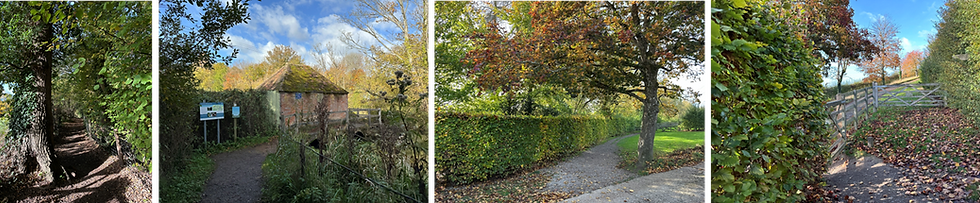
After passing through the kissing gate, turn left to follow the path alongside the River Arle. Before long you’ll come across the old eel house—a rare 19th‑century structure once used to trap eels as they journeyed downstream, a fascinating reminder of the area’s heritage.
Continue straight ahead along the main footpath until a wooden gate. Pass through, cross the drive, and carry on along the path, keeping the hedgerow the left as the countryside begins to open out around.
3
Shortly after the path merges with a tarmac lane, a bridleway branches off to the right. You are now walking along two scenic trails: the Wayfarer’s Walk—a 70-mile long-distance route stretching from Combe in Berkshire to Emsworth Harbour—and the Watercress Way, a 27-mile circular trail in Hampshire that largely follows the course of disused railway lines. At the next junction, continue along these two trails by bearing left.
This path skirts the edge of the Pinglestone Estate and the Louis Pommery Vineyard, offering glimpses of cultivated rows and open countryside. At the bridleway intersection at the end of this stretch, turn left to remain on the Wayfarers Walk.

4
Just before crossing a lane, take a moment to pause at a poignant memorial site. It offers a beautiful vantage point to reflect and appreciate the surrounding landscape, while paying tribute to three RAF Spitfire pilots who tragically lost their lives in a mid-air collision during a training exercise on 22 July 1944.
After a few minutes, the footpath arrives at a junction where four paths converge. Continue your journey by taking the first path on the right—this leads towards Windsor along the Three Castles Way, a 61mile scenic route linking Winchester, Odiham, and Windsor.

5
The path leads to a three-way intersection of quiet country lanes. Continue straight ahead in the direction of Alresford. Shortly after, cross the bridge over a small tributary of the River Alre.
At the next junction, continue on the path to the left, heading towards Abbotstone Farm House. Keep an eye out for the next right-hand turn—it’s clearly signposted and easy to follow.

6
As the gravel bridleway passes a ruined barn on your left, the route continues across the grass fields to your right. Follow the path alongside the line of telegraph poles. As the trail begins to descend (after a tucked away hay barn on the left), keep an eye out for a break in the hedge near a telegraph post—this marks where the path continues.

7
Follow the signs for the public footpath as it runs alongside the first field, then continues across the second. After crossing the second field, keep to the edge of the next field, with the hedgerow on your left as you walk.

8
This section leads onto a private drive—keep left, then turn right when you reach the lane. At the end of the tarmac, a small footpath continues on. When the path forks, keep right following the way marker. This path offers a scenic stretch, passing alongside the watercress beds, where you may spot a variety of birds enjoying the wetland habitat.

9
When the path meets a small lane, keep left before turning right at the next opportunity. This turn is marked by a small sign reading ‘The Fulling Mill’, which you’ll pass shortly after joining the new path.
This Grade II listed 13th-century building once played a vital role in Hampshire’s medieval cloth industry. Fulling was the process of cleansing, shrinking, and thickening woven fabric to make it more durable and water-resistant. Originally, this was done by treading cloth in water and fuller's earth, but by the medieval period, water-powered hammers replaced manual labour.

10
After passing the Fulling Mill, turn right to follow the course of the River Alre. Continue along this peaceful stretch until you reach the bird feeding station. Just beyond it, turn right again to stay alongside the river - passing by the large willow tree.
Just beyond the small memorial to Hambone Jr.—the beloved canine mascot of the 47th Infantry Regiment, 9th Division, U.S. Army, stationed in Alresford during the Second World War—you’ll see a wooden gate on your left.
Go through and retrace your steps across the field, returning to the Arlebury Park long-stay car park where your walk began.
